

Crazy Star casino Plinko game
Introduction
I have reviewed enough instant-win and arcade-style casino products to say this without exaggeration: Crazy star casino Plinko stands out not because it is complicated, but because it turns a very simple visual idea into a tense, highly variable gambling session. At first glance, Plinko looks almost too basic to deserve a serious breakdown. A ball drops from the top of a pegged board, bounces left and right, and lands in a multiplier slot at the bottom. That is the whole concept. Yet in practice, this format creates a very specific kind of player experience that feels different from slots, roulette, crash titles, and even most quick-result real money games.
For players in the United Kingdom, that difference matters. Plinko is easy to understand in seconds, but it is not always easy to read correctly. The interface suggests simplicity; the actual session can swing from calm and repetitive to sharp and punishing depending on the chosen risk level, board setup, and stake size. That gap between visual simplicity and real session behaviour is exactly why the game deserves a proper analysis.
In this article, I will focus strictly on the Plinko page experience at Crazy star casino. I will explain how the game works, why it attracts so much attention, what its probabilities mean in practical terms, how the pace feels over time, and what kind of player is likely to enjoy it. I will also cover the limits of the format, because Plinko is not automatically a good fit for everyone just because it is easy to launch.
What Plinko is and why it draws so much attention
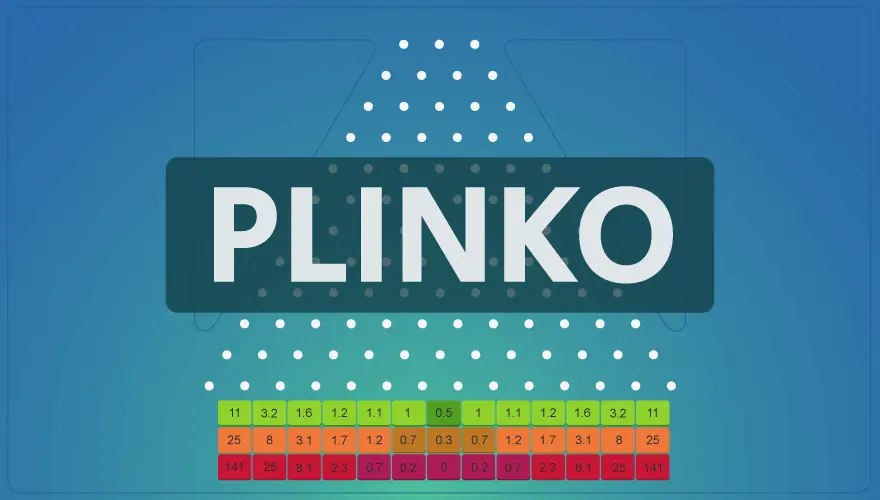
Plinko is a ball-drop gambling game built around controlled randomness. The player chooses a stake, often selects a risk setting and sometimes the number of rows, then releases a ball from the top of the board. As the ball hits pegs, it changes direction repeatedly before landing in one of several prize slots. Each slot carries a multiplier. Lower multipliers tend to sit in the more common landing zones, while the highest multipliers are usually placed at the far edges, where the ball reaches less often.
The immediate appeal is obvious. There is no paytable to memorise, no bonus round to wait for, no symbol hierarchy to decode. You see the entire event unfold in real time. That transparency gives Plinko a strong first impression. Even players who do not usually enjoy traditional slot play can understand the premise instantly. Mobile players should have a look at Crazy Star Casino bonus guide with codes offers and cashout rules before installing anything.
But that is only the surface. The deeper reason Plinko became so noticeable is psychological rather than visual. It combines three things that are hard to ignore:
- Visible randomness — the result is not hidden behind spinning reels or card dealing; you watch the path develop peg by peg.
- Short decision loops — a round resolves quickly, so the game encourages repeated drops and immediate adjustment.
- Rare but dramatic outcomes — top multipliers are uncommon, which makes near-misses and edge paths feel unusually intense.
One of the most important observations here is that Plinko often feels more “fair” to players than many other formats, even though it is still governed by mathematical house edge and random outcome generation. Why? Because the route is visible. People tend to trust what they can watch, even when the underlying probabilities remain firmly in the casino’s favour. That does not make the game better value by default, but it does explain why it captures attention so effectively.
How the Crazy star casino Plinko mechanic actually works
At Crazy star casino, the Plinko structure follows the familiar ball-drop model, but the practical experience depends on a few adjustable parameters. The core mechanic is simple: one ball, one drop, one final multiplier. The complexity comes from how the board is configured and how the probability distribution is shaped.
In most Plinko versions, the board is built like a probability funnel. The central slots are easier to reach because there are more possible left-right combinations that lead there. The extreme edges, where the largest multipliers usually sit, can only be reached through a narrower set of paths. This is why the game can advertise large potential returns while still producing many low or modest results over a session.
Here is the practical logic behind a standard Plinko round:
- The player sets a stake.
- The player chooses a risk mode, commonly low, medium, or high.
- In some versions, the player also selects the number of rows.
- A ball is released from the top of the board.
- At each peg, the ball shifts left or right according to the game’s random logic.
- The ball lands in a bottom slot with a fixed multiplier.
- The payout equals the stake multiplied by the final slot value.
That sounds straightforward, and it is. What matters is how each setting changes the shape of outcomes. Risk mode does not just make the game “more exciting” in a vague sense. It redistributes value across the board. Lower-risk settings usually compress the multiplier spread, making small returns more frequent and extreme outcomes rarer or less dramatic. Higher-risk settings do the opposite: they place more weight on low-end or losing-style results while reserving much larger multipliers for rare edge landings.
This is where many players misread the product. They assume the ball is simply bouncing around in a naturally chaotic way, like a physical arcade machine. In reality, the board is a presentation layer for a probability model. The visual path matters for player engagement, but the important thing is the payout distribution behind it. The board shows randomness; the math defines the session profile.
Why the pace feels so different from slots in a real session
The tempo of Plinko is one of its strongest defining traits. A slot can have fast spins too, but even quick slots tend to involve repeating visual cycles: spin, stop, evaluate symbols, maybe trigger a side event, then spin again. Plinko cuts through that pattern. Each round is short, self-contained, and visually resolved in a single downward movement.
That changes how a session feels in the body as much as in the mind. There is less waiting, less decorative animation, and less narrative framing around the result. You are not following a theme. You are tracking impact points and final landing zones. The result is a more stripped-back form of tension.
In practical terms, the rhythm depends on three factors:
- Drop speed — faster rounds increase turnover and can accelerate bankroll movement.
- Risk selection — higher-risk boards create longer stretches of weak outcomes interrupted by occasional spikes.
- Player behaviour — manual single drops feel more controlled; rapid repeated drops can turn the session into a momentum chase.
A useful way to think about Crazy star casino Plinko is this: it often feels calmer visually than a slot, but harsher mathematically over short stretches. That is a memorable contradiction. The screen is clean, the action is simple, and yet the bankroll can move quickly because there are so few buffers between one result and the next.
Another point that stands out in practice is how Plinko creates tension from trajectory rather than revelation. In a slot, suspense usually comes from what the reels might reveal. In Plinko, suspense comes from where the ball is drifting right now. That makes the emotional curve more immediate. You are not waiting for symbols to align; you are reacting to movement in real time.
Understanding risk levels, probability spread, and likely outcomes
If there is one area where players need clarity before launching Plinko, it is risk configuration. The game can look nearly identical across settings while behaving very differently underneath. This is not a cosmetic option. It is the central control that shapes your session.
Low-risk Plinko usually offers a narrower multiplier range. You are more likely to see small returns or partial stake recovery, and less likely to hit a standout top-end result. This can make the game feel smoother, although “smoother” should not be confused with “safe.” The house edge still applies, and long sessions can still trend down.
Medium-risk settings often provide the most balanced version of the format. They allow for noticeable variation without pushing the player into the severe dry spells that higher-risk boards can create. For many users, this is the best place to understand the game before experimenting further.
High-risk Plinko is where the product becomes most volatile in practical terms. The top multipliers can look attractive, but the path to them is narrow. Sessions on this setting can produce many underwhelming results in a row. A player may feel close to a big hit because the ball repeatedly drifts toward the edge, but near-miss perception is part of the experience and should not be mistaken for improving odds.
The table below summarises how these settings typically differ in real play.
| Risk level | Typical session feel | Common outcome pattern | Who may prefer it |
|---|---|---|---|
| Low | Steadier, less dramatic | More frequent modest multipliers, fewer extremes | Players testing the format or managing smaller balances |
| Medium | Balanced and readable | Mix of low, mid, and occasional stronger returns | Players who want variation without full high-risk pressure |
| High | Sharp, swingy, emotionally intense | Longer weak stretches with rare high multipliers | Players comfortable with aggressive variance |
One of the most useful truths about Plinko is also one of the least glamorous: the rarest outcomes are doing a lot of mathematical work. In other words, advertised maximum multipliers help shape the game’s return profile, but most players will not encounter them often. That does not mean the game is misleading; it means expectation should be realistic. Chasing the outermost slots as if they are due is a fast way to misunderstand the format.
What the numbers mean for a real bankroll session
Players often ask whether Plinko is “better” than slots in terms of probabilities. That question is too broad to answer cleanly because RTP, variance, and hit frequency differ from one product to another. What I can say is that Plinko presents probability in a more visible form, but not necessarily in a more forgiving one.
The key issue is distribution. A session can contain many outcomes that look active but do little for the balance. Small multipliers may soften losses, yet they do not always meaningfully extend play if the stake is too high relative to the bankroll. This becomes especially important in rapid-fire sessions, where dozens of drops can happen before the player has properly evaluated the pattern. The full picture of payment methods lives in free spins overview, including the less common ones.
Here are the practical bankroll implications I would stress:
- Fast rounds increase exposure. Even modest stakes can add up quickly when the pace is high.
- Session-by-session variance means a single profitable round does not guarantee an edge.
- High-risk settings magnify emotional decision-making. Players may raise stakes after long cold runs or after one strong hit.
- Short-term variance is powerful. A brief session can look excellent or poor without saying much about the longer mathematical profile.
This is where demo play, if available, becomes genuinely useful. Not because it predicts future results, but because it teaches rhythm. Plinko is a game of tempo and expectation management. A few minutes in demo mode can show a player whether the cadence feels engaging, repetitive, stressful, or too severe for their style.
How Plinko differs from slots and other casino game formats
Plinko is often grouped loosely with slots because both are simple to launch and driven by random outcomes. That comparison is understandable, but it misses the way Plinko changes the relationship between player input, visual feedback, and result timing.
The clearest differences are these:
| Format | What drives the experience | Player expectation | Session character |
|---|---|---|---|
| Plinko | Ball trajectory and final multiplier slot | Quick result, visible path, adjustable risk | Fast, direct, highly sensitive to variance |
| Classic slots | Reel symbols, line structure, bonus triggers | Build-up through spins and feature potential | More thematic, often less stripped-down |
| Roulette | Fixed betting layout and single-number outcome | Clear odds per bet type | Structured and table-driven |
| Crash games | Cash-out timing before multiplier collapse | Decision under pressure | Interactive and timing-based |
Unlike slots, Plinko usually offers almost no layered storytelling. There are no free spins to anticipate, no expanding wilds, no cascading symbol chains. That can be a strength or a weakness depending on the player. If someone wants a clean, fast, mathematically legible product, Plinko has real appeal. If they want progression, theme, and feature variety, it may feel too bare. If bonuses are what you care about, welcome bonus checks before using Crazy Star Casino breaks down every offer currently running.
Compared with roulette, Plinko looks less formal and more playful, but the underlying truth is similar: the result is still governed by probability, not by reading patterns. Compared with crash titles, Plinko removes timing decisions. You commit to the drop and accept the outcome. There is no mid-round intervention, which some players find refreshing and others find passive.
Where the game performs well and where it can disappoint
From an analytical point of view, Plinko has several genuine strengths. The first is accessibility. I can show the game to a new player and they understand the basic loop almost immediately. The second is clarity of result. There is little ambiguity about what happened in a round. The third is configurability. Risk settings give the player a meaningful way to shape the style of play without learning a complex ruleset.
That said, the format also has clear limits.
What works well in practice:
- It is easy to learn and quick to start.
- The visual path keeps attention better than many static instant-win formats.
- Risk modes create distinct session profiles.
- The stripped-back interface makes bankroll movement easier to track.
Where problems can appear:
- The simplicity can become repetitive for players who need more variety.
- High-risk boards can burn through a balance faster than the calm presentation suggests.
- Near-edge landings can encourage emotional overreading of “almost” outcomes.
- Large advertised multipliers may dominate attention even though they occur infrequently.
One of the most interesting contradictions of Crazystar casino Plinko is that it can feel both transparent and misleading at the same time. Transparent, because the player watches every bounce. Misleading, because the visible path can create an illusion of readable momentum where none exists. That is not a flaw unique to this version; it is built into the format itself.
Who Plinko suits best and who may prefer another style
I would recommend Plinko primarily to players who value immediacy, clean design, and session control through simple settings rather than through complicated bonus systems. It suits users who enjoy short rounds, understand variance, and do not need a heavy theme or long-form feature structure to stay engaged. Anyone stuck on account verification can follow the steps laid out in chicken road review.
It may be a particularly good fit for:
- Players who want a quick-result gambling format without learning a detailed paytable.
- Users who like adjusting risk and observing how that changes the session profile.
- People who prefer direct visual feedback over layered slot animations.
On the other hand, I would be more cautious in recommending it to players who chase entertainment through narrative slot design, long bonus rounds, or slower table-game pacing. It may also disappoint those who interpret visible ball movement as a sign that outcomes are more controllable than they really are.
If someone gets frustrated by repeated low-end results, high-risk Plinko can be a poor match. If someone gets bored when there is no feature progression, even a well-made Plinko board may feel thin after a short session. This is why the game is best judged not by trend value, but by personal fit. Table game fans will get more out of this review after reading crash games details.
What to check before launching a session at Crazy star casino
Before starting a real-money session on Crazy star casino Plinko, I would suggest checking a few practical points. These do not change the mathematics, but they strongly affect how manageable and readable the session becomes.
- Confirm the stake relative to your balance. Because rounds resolve quickly, even a modest overbet can shorten the session more than expected.
- Start with a risk level you can actually observe calmly. Medium is often the best testing ground.
- Look at the multiplier layout before dropping repeatedly. Understand where the value concentration sits.
- Decide in advance whether you want a short burst or a longer session. Plinko can drift into autopilot if you do not set limits.
- Use demo mode first if available. Not to “solve” the board, but to learn the pace and emotional feel.
This is also the point where I would stress a simple but important rule: do not let the clean interface fool you into treating the game casually. Plinko looks light. It is not always light on the bankroll. The faster and simpler a casino product appears, the more discipline usually matters.
Final verdict on Crazy star casino Plinko
Crazy star casino Plinko offers a very specific kind of gambling experience: fast, visible, low-friction, and heavily shaped by variance. Its core strength is not depth in the traditional slot sense. It does not offer story, expanding features, or long bonus arcs. What it offers instead is directness. You choose your stake, set the risk profile, release the ball, and live with the result.
That directness is exactly why the game works for many players. It is easy to read, easy to enter, and capable of producing real tension from a minimal design. The risk settings meaningfully change the session, which gives the format more range than its simple appearance suggests. For players who enjoy clean probability-driven action, Plinko can be genuinely compelling.
At the same time, caution is necessary. The visible ball path can make randomness feel more personal than it is. High-risk modes can be punishing. Rapid rounds can accelerate losses before the player properly registers the pattern. And for anyone who wants richer structure or longer-form entertainment, the format may start to feel repetitive.
My honest conclusion is this: Plinko is not impressive because it is flashy. It is impressive because it reduces casino play to a sharp, readable loop and still manages to create suspense. If you understand that the simplicity is only visual, not mathematical, you are far more likely to approach it correctly. For the right player, Crazy star casino Plinko is engaging, efficient, and surprisingly tense. For the wrong player, it can feel thin, abrupt, and harsher than expected.
That is the real answer to whether it is worth trying. Yes, if you want a quick, probability-led format and you are comfortable with session swings. No, if you need feature depth, slower pacing, or the illusion of control. Plinko knows exactly what it is. The smart move is making sure that matches what you want from the session.
FAQ
How does Plinko work when a ball is dropped?
After selecting your stake, the ball drops through the board and bounces between pegs. It finally lands in one of the result slots with a multiplier attached. The displayed multiplier determines the win or loss for that ball.
What should be checked before switching from demo mode to real-money play?
Confirm the mode shown in the game lobby and verify that the balance used is your real-money balance. Real-money play follows wagering rules attached to any active offer, if applicable. Demo results do not translate into cash.
Why do some Plinko sessions feel higher risk even with the same stake?
Plinko outcomes depend on where the ball lands after it hits multiple pegs. Even if the stake stays unchanged, the result multipliers can vary widely from round to round. Game speed and number of balls played in one session also affect overall volatility for the player.
Can the Plinko board be played on the mobile casino app?
The Plinko game supports mobile play through the casino interface, including the mobile casino app experience. Controls are designed for quick stake setting and starting the ball drop. A stable internet connection helps keep the rounds smooth.
Is it possible to start Plinko right after casino login?
Login typically gives immediate access to the game lobby and real-money play options. Once signed in, open the casino games area and select Plinko to launch the board. If a bonus offer is active, check whether its wagering terms apply before placing stakes.
What is the quickest way to reach the Plinko game section on the official site?
Use the Games or Casino Games section to open the game lobby, then pick Plinko from the list. For faster access, filters may help when browsing slots or instant casino games. Once selected, the board opens in the game window.
What happens if the Plinko game fails to load on the current page?
Refresh the game window and try launching Plinko again from the lobby. Clearing browser cache or switching to a different browser may fix stuck loading. If the site offers a working mirror, selecting it can also restore access.
When a bonus offer is active, does Plinko automatically use it?
A bonus may require activation through a promo code or an account setting before it becomes available for wagering. Placing a stake in Plinko should reflect whether the offer is currently active. If the bonus balance appears separately in the cashier area, check its rules before playing.
Where should the promo code or bonus code be entered before playing Plinko?
Promo code entry is usually handled in the registration or bonus area linked to the account. Check the account menu for a promo or bonus code field, then confirm it before taking any gameplay steps. Status indicators should show whether the offer is applied.
If a working mirror is needed, how does it affect the Plinko session?
A working mirror helps restore access to the online casino when a connection issue happens. After switching, returning to the game lobby should allow launching Plinko again. Current round outcomes generally depend on the session state in the game window.
Are there rules or limits for Plinko sessions that should be reviewed first?
Plinko gameplay follows the site’s general casino rules, including responsible gambling and account verification requirements where relevant. Any active bonus can add wagering terms that change how winnings are treated. Table or game limits may apply for stakes, depending on the session and account status.
What is the difference between Plinko and other quick casino games in the lobby?
Plinko focuses on ball drops and peg bounces that determine multipliers by landing position. Other quick games may rely on different mechanics such as card outcomes, reels, or live dealer decisions. Because the mechanism is different, volatility and pacing feel distinct even at the same stake.